

GSM Explained: Understanding Paper and Card Weight
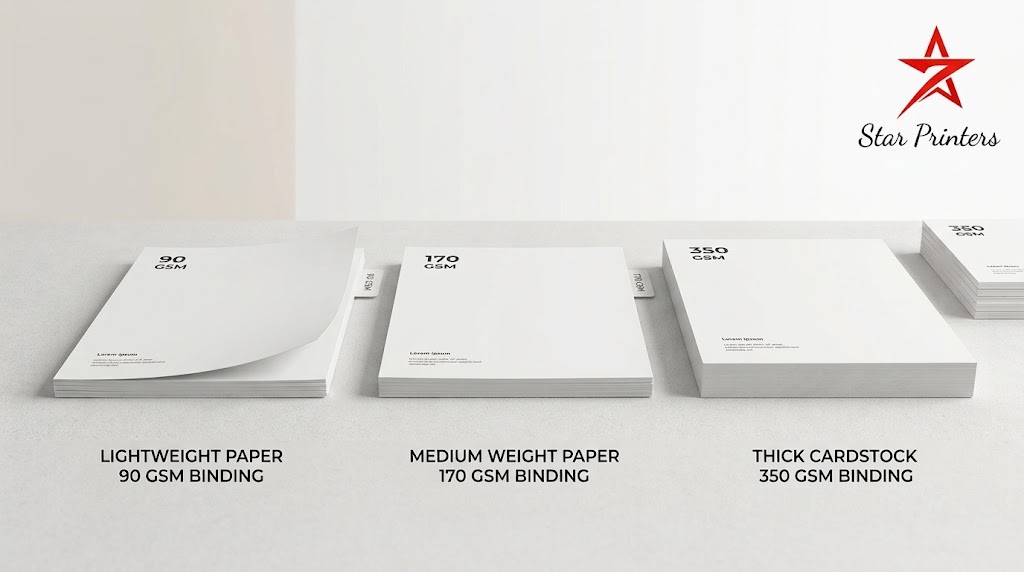
GSM stands for grams per square metre, and it's the standard way paper and card weight is measured. Higher GSM means heavier, thicker, more rigid paper. It's one of the simplest specifications to understand, but it makes a real difference to how a finished product feels and performs.
Roughly what each range suits
- 80–100gsm — standard office paper weight, used for everyday documents and letterheads that need to feed through a printer for a second pass.
- 130–170gsm — typical for flyers and leaflets: substantial enough to feel like proper print, light enough to keep bulk print runs affordable.
- 250–300gsm — a common card weight for postcards and lighter business cards.
- 350–400gsm — a sturdier, more premium card weight, typical for business cards that need to survive a wallet, or certificates and formal documents.
Heavier isn't always better
A thicker card stock feels more premium, but it isn't the right choice for everything. A letterhead needs to be light enough to feed through an office printer for a second pass of text; a flyer meant for bulk distribution needs to stay affordable at volume. Matching weight to purpose matters more than simply choosing the heaviest option available.
Finish changes how weight feels too
A lamination or coating can make a lighter card feel more substantial than its GSM alone suggests, while an uncoated card of the same weight can feel comparatively thin. If you're not sure how a specification will actually feel once printed, ask for a sample before committing to a large run.
Not sure what weight suits your project? Contact Star Printers with what you're printing and how it'll be used, and we'll recommend a practical stock rather than leaving you to guess from a spec sheet.
How to check what weight you actually need
If you're not sure what GSM to specify, think about how the finished item will be handled. Something posted or handled briefly, like a flyer, can use a lighter weight. Something kept in a wallet or handled repeatedly, like a business card or loyalty card, benefits from a heavier, more durable stock. Something formal, like a certificate or invitation, often uses a heavier, textured stock specifically because the weight itself signals quality.
GSM isn't the only spec that matters
Two papers at the same GSM can still feel different depending on finish, an uncoated stock feels different to a laminated one of the same weight, and texture, a smooth stock versus a linen or textured finish changes the tactile impression regardless of weight. If you're choosing based on how something should feel in the hand, ask to see or feel a sample rather than relying on the GSM number alone.
Not sure what to specify for your project? Contact Star Printers and tell us what you're printing, we'll recommend a practical weight and finish.