

Start with the job the brochure has to do
A brochure should help someone make a decision: choose a service, understand a product, plan a visit or learn about an organisation. Before you think about folds and paper, write down who will read it, where they will pick it up and what you want them to do next. That determines the format.
Common brochure formats
- Bi-fold: one sheet folded once into four panels. Simple and economical.
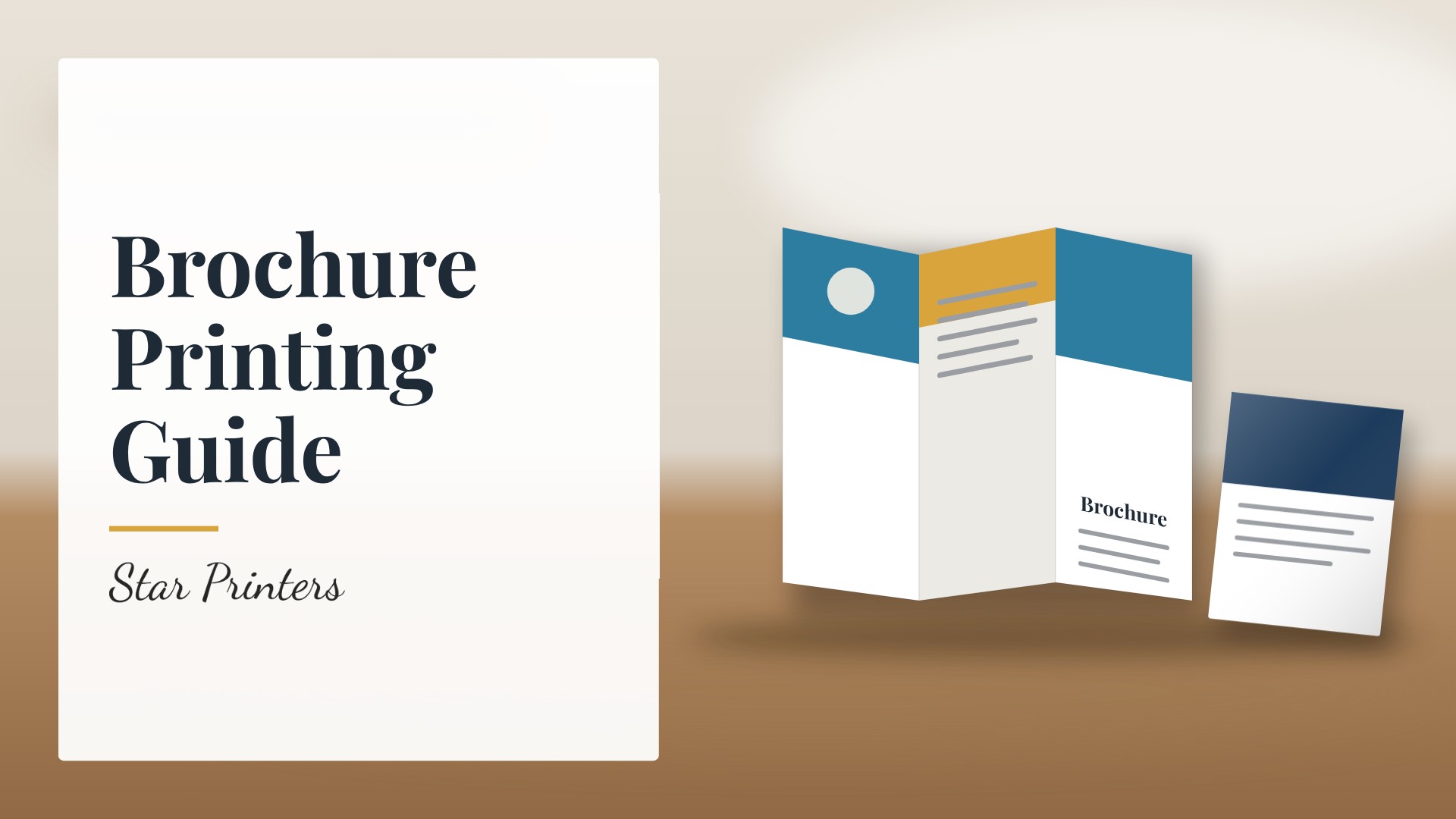
- Tri-fold: one sheet folded into six panels, popular for menus, price lists and service summaries.
- Stapled booklet: a cover and inside pages stapled along the spine, with page counts in multiples of four.
- Perfect-bound: a flat glued spine for thicker catalogues and reports.
Popular sizes
A4 and A5 are the most common sizes, and DL (one third of A4) is popular for tri-fold leaflets that fit into an envelope or a display stand. Choosing a standard size usually keeps the price lower, and makes it easier to find stands and envelopes that fit.
Paper choices
For folded brochures, a medium-weight paper gives a good feel without being hard to fold. For stapled brochures, many people use a heavier cover and lighter inner pages. See our paper weight guide for what the numbers mean, and ask to handle samples in the shop.
Keeping brochure printing affordable
- Use a standard size and a sensible number of pages.
- Do not over-order: details change faster than you expect.
- Supply print-ready artwork to avoid extra rounds of changes.
- Ask for prices at two quantities and compare.
Artwork basics
Set the file up at the finished size, add 3mm bleed if the design runs to the edge, and keep text away from folds. Folded brochures need panels laid out in the right order, so ask your printer for a template if you are unsure. Our artwork guide explains bleed and resolution.
Common brochure mistakes
- Text too close to a fold, so words disappear into the crease.
- Panels in the wrong order, so the brochure does not read correctly when folded.
- Too much copy, which makes the brochure hard to read quickly.
- Missing contact details, opening hours or a clear next step.
- Outdated prices or dates that mean the whole run needs reprinting.
Writing for a brochure
Lead with the benefit for the reader, not a history of the business. Use short headings, short paragraphs and a clear call to action, such as a phone number or a website address. If prices change often, consider printing the price list as a separate insert, so you do not have to reprint the whole brochure.
Proofing before you print
Read the whole brochure aloud, check every number and spelling, and ask someone who has not worked on it to read it too. Fold a paper mock-up to check that the panels read in the right order. Approve a proof only when you are happy with every panel.
Get your brochures printed
See our brochure printing services page or stapled booklets, and message us on WhatsApp with the format, size and quantity for a price. Our free design service can lay out your brochure if you do not have a designer.