

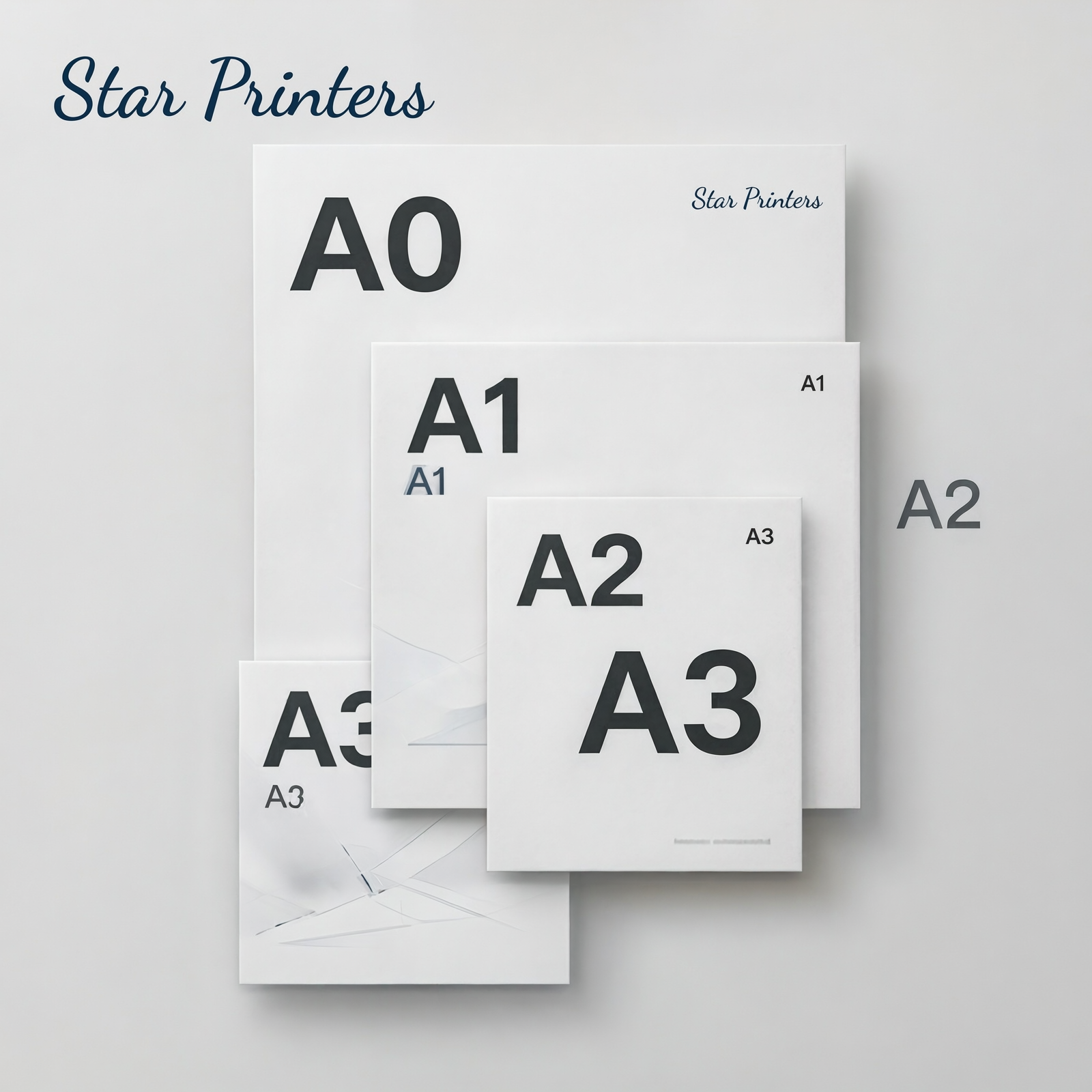
The standard sizes
- A3 (297 x 420mm) — suited to close viewing: a noticeboard, a shop counter, a small window display where someone stands within a metre or two.
- A2 (420 x 594mm) — a step up, still suited to indoor use at a moderate distance, such as a retail window or a corridor.
- A1 (594 x 841mm) — a common choice for events, presentations and larger retail displays, readable from several metres away.
- A0 (841 x 1189mm) — the largest standard size, used where a poster needs to be seen from across a room or further, such as an exhibition stand or a large shop window.
Match the design to the size, not just the size to the wall
A common mistake is choosing a size based on available wall space rather than reading distance, then cramming in the same amount of detail regardless of size. A poster meant to be read from a distance needs a bolder, simpler design with larger text; fine detail and small text are wasted at that distance and just make the poster look cluttered up close.Paper choice affects more than looks
A semi-gloss finish gives punchier colour for an indoor display; a matte finish reduces glare under bright lighting. If a poster is likely to be touched, handled, or exposed to any damp, a non-tearable stock lasts considerably longer than standard paper.Ordering the same design at multiple sizes
If you need the same poster for a shop window at A0 and a smaller in-store version at A3, tell us both sizes upfront. Not every design that works at full size still reads clearly once scaled down, and it's easier to check that before printing than after. Browse our poster printing options or contact us with your size, quantity and where the poster will be displayed for practical advice.Beyond A0: when you need something bigger
For displays larger than A0, such as a shopfront or exhibition backdrop, large format printing on a roll rather than a standard sheet size becomes the practical option, letting you print at a genuinely custom size rather than being limited to the A-series. This is common for banners and large signage rather than traditional "posters" as such.Quantity and cost
Printing multiple posters of the same design brings the per-poster cost down significantly compared with a single print, so if you know you'll need posters for several locations or repeat use, ordering together is usually more cost-effective than reordering small batches as needed.Common poster sizes in millimetres and inches
These are the standard poster sizes in the A series (ISO 216):
- A4: 210 x 297mm (8.3 x 11.7 inches), good for small posters and notices
- A3: 297 x 420mm (11.7 x 16.5 inches)
- A2: 420 x 594mm (16.5 x 23.4 inches)
- A1: 594 x 841mm (23.4 x 33.1 inches)
- A0: 841 x 1189mm (33.1 x 46.8 inches)
An A1 poster is twice the area of an A2 poster, and an A0 poster is twice the area of A1. The A1 format is a popular choice for exhibitions and displays. Using a standard paper size keeps printing straightforward and makes frames easy to find.
What about a movie poster size?
Film posters are traditionally printed at sizes such as 27 x 40 inches, which is not an A size. If you need a particular movie poster size for your own movie posters or prints, tell us the dimensions and we will confirm whether we can print it.
Choosing a size for where it will be displayed
- Bulletin boards and notice boards: A3 or A4 small posters are usually enough, because people read them up close.
- Art prints and framing: A3, A2 and A1 are common art print sizes with standard frames.
- Shop windows and events: A2 or A1, because people read them from further away. See our guide on viewing distance.
- Outdoor advertisement: posters outdoors need a weatherproof material, so ask about PVC posters.